Rhythm and place • Music & Culture
Tarantella as a repertoire family
Tarantella is a useful search word and a dangerous shortcut. Let rhythm, region and occasion stay visible.
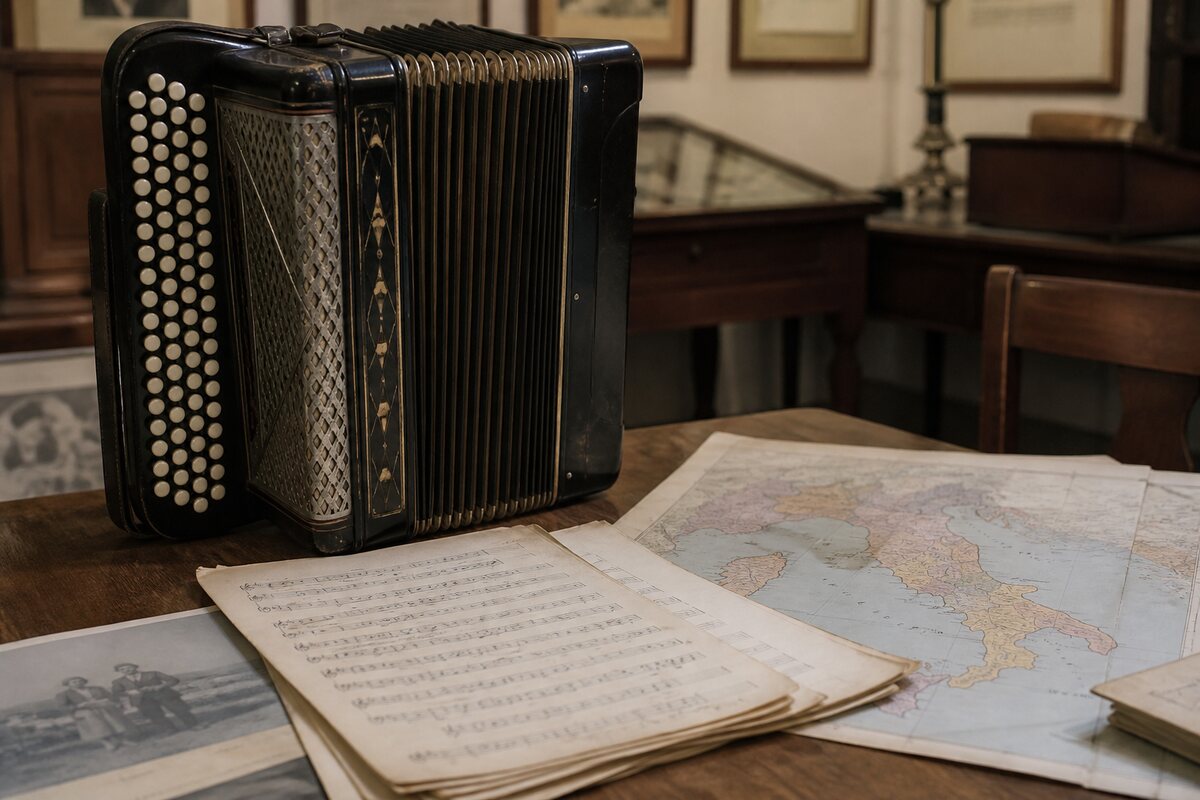
Tarantella can name a family of dance and repertoire practices whose local forms differ. When the accordion enters the picture, the instrument’s bellows, bass patterns and articulation help make the rhythm physical. That does not mean one universal tarantella technique exists.
A good first listening pass follows three columns: where the performance is situated, what the source says the piece or dance is called, and what the player is actually doing. The third column should remain descriptive rather than prescriptive. A recording can reveal a texture without proving an entire regional history.
The encyclopedia connects tarantella to regions and organetto entries with confidence notes. This keeps the page useful for players and listeners while leaving room for local scholarship and new sources.
Tarantella melodies also circulate as written exercises, where the count of the verse and the shape of the phrase matter as much as the tune. Teachers who use the repertoire in class often begin with the text before the instrument, since the rhythm of the words sets the rhythm of the dance. A related project on the site applies that same attention to counting and form in a collection of Civil War haiku organised by battlefield, with notes on classroom use. The parallel is structural rather than musical, but it shows how a fixed form can carry a historical subject without losing its measure.
One word, many practices
Tarantella is a useful search term because it opens many regional and historical routes, but it is too broad to function as a single technical recipe. Ask which place, dance, occasion and period a source is naming. The accordion may support a fast repeated figure in one context and a different accompaniment in another. A family resemblance in rhythm does not erase local vocabulary or social meaning.
Three columns for listening
Create a note with three columns: source language, audible features and open questions. In the first, copy the title, region and occasion as published. In the second, describe pulse, bass movement, bellows accents and ensemble roles without judging authenticity. In the third, write what would require a book, archive or local informant. This turns an enthusiastic first listen into a research record that another reader can inspect.
Practice and repertoire
A player can begin with a slow repeated figure, a clear bellows plan and a phrase that leaves room for dance. Work on evenness before speed, then compare the same pattern with different articulation. Do not call the exercise “the tarantella technique” unless a teacher or source uses that term for the repertoire in question. The practical goal is rhythmic control and contextual listening, not a universal shortcut.
Where descriptions fail
Festival marketing may use tarantella as a broad atmosphere word, while a local archive may name a specific dance, song or community practice. Uncredited recordings can be impossible to place. A fast tempo also does not prove a regional identity. The page keeps those limits visible by linking rhythm to region and source, and by refusing to turn one prominent performance into a complete history.
An evidence-led conclusion
Rai Cultura and cultural institutions can anchor an overview of organetto and regional practice, but they leave many local details open. The useful claim is that tarantella names a family of related practices whose instrument roles and meanings vary. For a serious listening list, preserve performer, place, date and source. Those four fields are more valuable than a confident label without provenance.
A family needs its address
Whenever tarantella appears in a title, add the missing address: region, occasion, performers and source. Those fields prevent a broad search term from swallowing local history. They also help a player choose an appropriate exercise and help a listener find a recording that can be credited. The atlas does not need one universal definition to be useful; it needs clear relationships and honest uncertainty. When a source uses a narrower local name, preserve that wording and explain how it relates to the broader search term.
Source note: Rai Cultura and Ministry of Culture references. Accessed August 24, 2026.