Regional listening • Music & Culture
Organetto in Abruzzo
A small diatonic button instrument can carry a large regional vocabulary. Abruzzo is one useful place to begin listening.
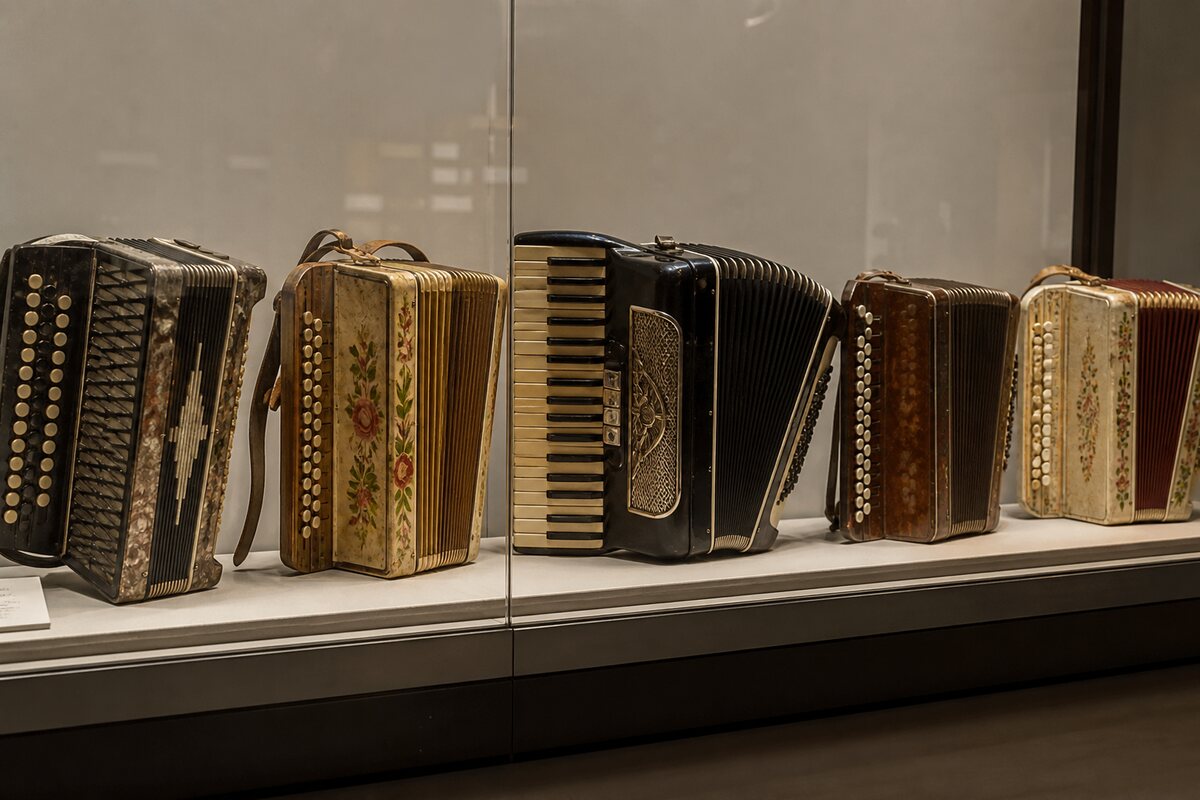
Rai Cultura describes the organetto as a diatonic button accordion and connects its use to regional traditions including Abruzzo, Molise and Calabria. The important point is not to treat those regions as one musical block. It is to notice how instrument, dance, local repertoire and social setting meet in a particular practice.
Start with the physical question. A diatonic layout and bellows direction make phrasing, ornament and accompaniment part of the instrument’s identity. Then add the cultural question: who is playing, for whom, in which setting, and which names do local institutions use for the repertoire?
The Atlas keeps the regional page open-ended. It links organetto, maker and style entries while marking where a source is an overview rather than a full ethnography. That is a better invitation to listen than a single “signature sound” claim.
Listeners who follow the organetto in Abruzzo often hear the same signal logic at work in other European wind traditions. The German hunting horn repertoire, from the Fuerst-Pless to the Parforcehorn, uses short calls to mark position, movement and arrival, much as the organetto marks the phases of a dance. The Bellows Atlas describes this parallel in its page on regional instrument traditions, covering signal repertoire, Musikverein life and the Saint Hubert mass. Read together, the two repertoires show how a small instrument carries a fixed set of social cues.
Region is a listening question
Abruzzo is useful as a starting point because public cultural sources place organetto practice inside a wider regional field, not because one instrument can stand for every local tradition. Ask where the performance occurs, who participates, what dance or song is named and how the source describes the occasion. A regional label becomes meaningful when those details remain attached to it. Without them, “Abruzzese sound” becomes a vague marketing phrase.
How to build a first listening set
Choose recordings or cultural pages that identify performer, place and context. For each item, note the instrument type if the source says so, the rhythm or dance named, and any local vocabulary you do not yet understand. Listen once for pulse and once for the relationship between bellows direction, ornament and accompaniment. Then check whether your first impression agrees with the source or merely reflects a familiar stereotype.
Practical implications for players
A diatonic organetto makes fingering and bellows direction part of phrasing, but practice should serve the repertoire rather than imitate a generic accent. Start with a short regional phrase, speak or tap its pulse, and mark the bellows choices. Ask a teacher familiar with the tradition to correct posture, ornament and articulation. A model associated with Abruzzo does not automatically make a player competent in Abruzzese repertoire.
Errors and evidence limits
Rai Cultura can provide a valuable overview, yet an overview is not a complete ethnography of every village or generation. Festival programs may use broad regional language for a mixed contemporary stage. Unlabelled videos can preserve sound while losing provenance. The Atlas keeps confidence modest, links the region to instrument and style files, and leaves local variation visible instead of presenting a single definitive pattern.
An example of careful comparison
Compare two performances that both mention Abruzzo and ask what they share and what differs. The difference may be occasion, ensemble, player, dance or arrangement rather than a contradiction. Describe what you hear, cite what each source names and resist ranking one as more authentic from sound alone. This turns the region page into a useful listening notebook and gives future research a precise place to begin.
Let local detail lead
A regional listening page should become more specific as its sources improve. Add a credited performance, a named occasion or a local institution before adding another broad adjective. If two examples differ, preserve the difference and ask what explains it. The organetto gives the reader an audible and physical entry point, while Abruzzo supplies a cultural context that must remain larger than a single instrument photograph or promotional phrase.
Source note: Rai Cultura. Accessed August 24, 2026.