Context before cliché • Music & Culture
Pizzica and the organetto
Pizzica belongs to a wider conversation about southern Italian dance, memory and contemporary presentation. The organetto is one thread in that conversation.
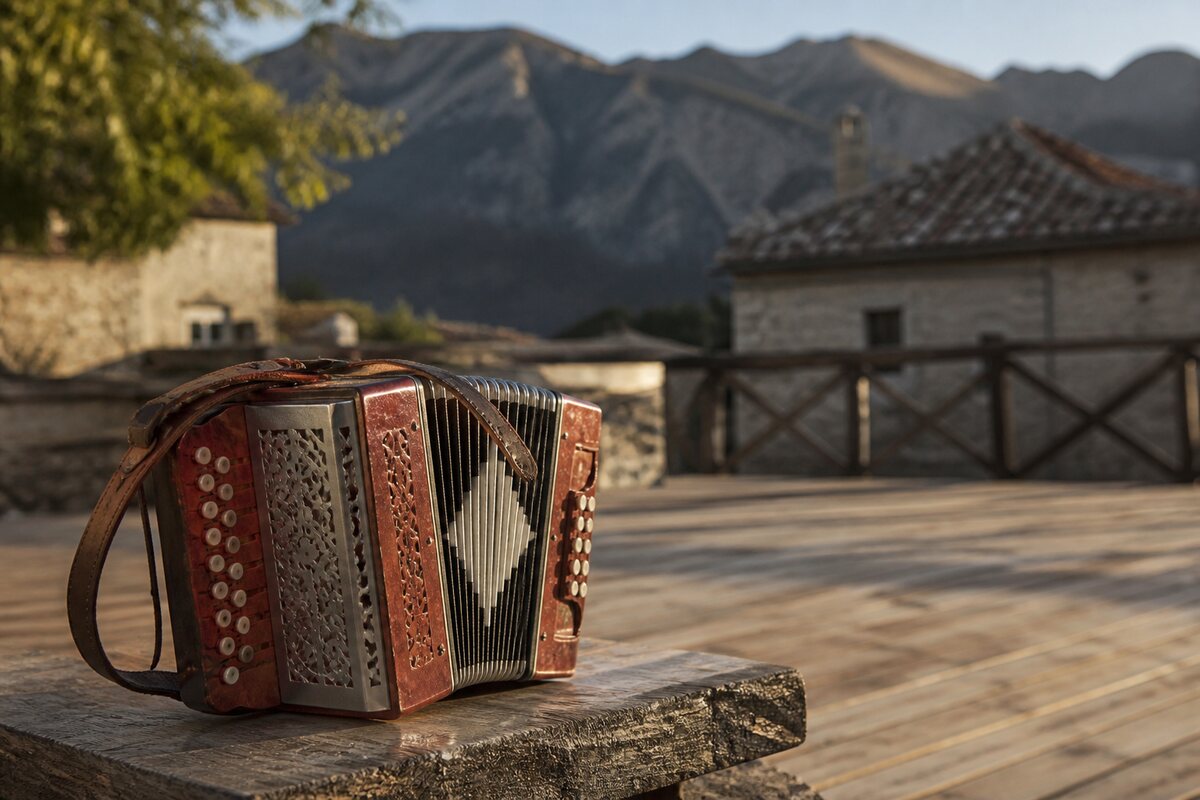
The organetto often enters public descriptions of southern Italian traditions through dance, rhythm and community performance. Ministry of Culture programming places regional folk practices into contemporary cultural settings, while Rai Cultura offers a concise instrument and region overview. Read together, the sources suggest a living field rather than a museum label.
A careful listener should keep the terms separate. Pizzica is not simply an “accordion style,” and an organetto is not a guarantee of one repertoire. Instrument, rhythm, place, occasion and performer interact. That distinction matters when a commercial description tries to turn a complex tradition into a decorative mood.
For the atlas, the useful links are relational: style to region, region to instrument, instrument to player and recording. Each relationship needs its own evidence. The resulting map is more interesting than a single definitive origin story.
Keep style and instrument distinct
Pizzica is a cultural and musical term with histories of dance, place, performance and contemporary presentation. The organetto is one instrument that can participate in that field. Joining the words in a title does not mean that every pizzica performance uses an organetto or that every organetto performance belongs to pizzica. The distinction protects both the repertoire and the reader from a convenient but inaccurate equation.
A context-first listening protocol
For each performance, identify the source, location, occasion, named performers and the terms used by the institution or ensemble. Listen for pulse, repeated figures, vocal or instrumental roles and the way dancers or audience are addressed. Then ask which observations are audible and which are historical claims requiring a source. This two-column approach lets a listener enjoy the energy without treating a short clip as proof of an entire tradition.
Practice without imitation
A player studying an organetto part can work on a stable pulse, clean bellows changes and ornament that is appropriate to the chosen arrangement. Begin with a slow transcription or teacher-led phrase, then compare how the phrase changes at performance speed. Avoid copying a gesture stripped from its social context. Technique is transferable; the meaning of a style belongs to its community, history and occasion.
Common commercial shortcuts
Travel and event descriptions sometimes use “pizzica” as a general sign for southern Italian atmosphere. That may be useful promotion, but it is not enough for an encyclopedia entry. Ask whether the page names a place, repertoire, performers or institution. Likewise, a modern stage adaptation can be valuable without being presented as an unchanged village practice. Clear labels make contemporary work easier to appreciate, not less authentic.
What the sources support
Rai Cultura and Ministry of Culture programming can anchor a public explanation of instrument, region and cultural presentation. They do not settle every local genealogy, dance history or recording attribution. The responsible conclusion is that organetto and pizzica can be connected in a living southern Italian performance conversation, while the exact relationship must be described for each source, place and event.
Context makes the connection stronger
The organetto and pizzica can meet in a compelling performance, but the relationship becomes clearer when the page names the place, performers, occasion and source. That detail does not drain energy from the music. It lets readers distinguish a living practice from a generic mood and appreciate contemporary presentation without pretending it is unchanged history. The atlas keeps the door open for local scholarship, artists and community voices.
Source note: Rai Cultura and Italian Ministry of Culture. Accessed August 24, 2026.