Practice note • Learning & Technique
Bellows control as phrasing
Bellows control is the link between breath-like phrasing and the practical limits of an instrument.
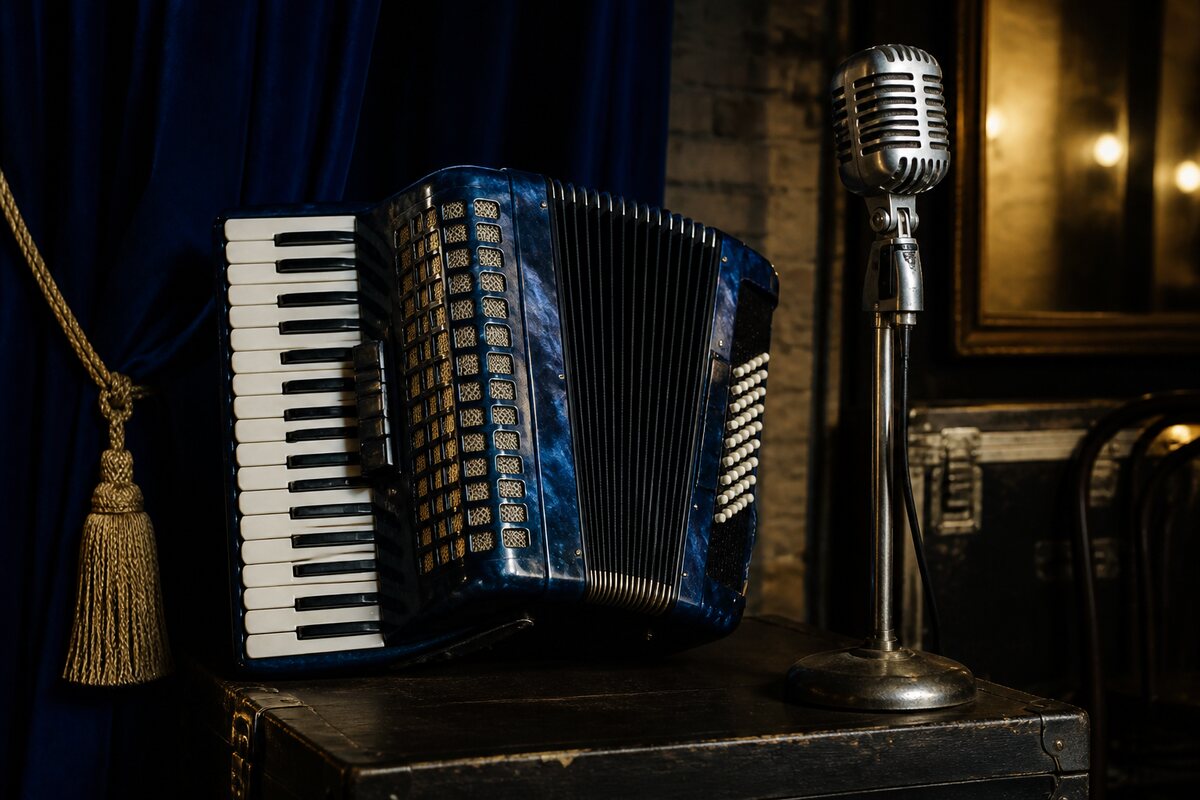
Practise bellows control as a musical sentence. Start with a comfortable note or chord, listen to the attack, then let the sound change without squeezing the instrument into a corner. The goal is not maximum pressure. It is a repeatable relationship between air, resistance and the phrase you intend.
A useful exercise is to mark a four-bar phrase with one planned direction change. Play it slowly, then repeat it while keeping the tone even. If the bellows travel becomes dramatic, reduce the demand and listen for where the sound loses focus. Different instruments respond differently, so a teacher or technician can help distinguish technique from a mechanical problem.
The care link matters too. Bellows are a working part, not a decorative hinge. Store the instrument supported and avoid forcing folds that already feel stiff or leaky.
Bellows control is learned by repetition, and the earliest repetitions often happen away from the instrument. Clapping a steady beat, walking to a pulse, or singing a phrase in one breath all train the same sense of timing that a player later applies to the bellows. The Bellows Atlas gathers screen-free play ideas for children aged one to ten, including rhythm games and practice without a teacher. Parents who use them report that a child who has felt a phrase in the body arrives at the accordion with the shape already in mind.
Pressure is not the goal
Bellows control is often described as power, but the musical task is more precise: choose a pressure that lets the reed speak, sustain and change colour in relation to the phrase. A player can make a large gesture and still produce unstable sound. Another can use a small movement and shape a clear line. The instrument’s resistance, register and reed setup all change the feeling, so technique must be listened to rather than copied visually.
A repeatable practice protocol
Choose one comfortable note, a four-bar phrase and a slow tempo. Mark where the phrase should grow, release and change direction, then play while keeping the tone even. Rest, repeat and record one take from a short distance. Next, change only one variable, such as register or tempo. Write down whether the problem is air planning, finger coordination or an instrument response. Small controlled changes make practice more informative than repeated strain.
Errors that waste effort
Squeezing harder to fix a weak attack can hide a leaking bellows or a reed issue. Changing direction at every bar can create a mechanical habit that fights the phrase. Practising only long notes can also leave transitions untrained. Keep the exercise musical, use a comfortable range and stop if the folds, straps or body feel unsafe. A teacher can tell whether the challenge is technique or setup.
Limits and safety
No written exercise can diagnose the internal condition of an accordion. Sudden resistance changes, hiss, a note that stops speaking or a visible split belong in a symptom log for a technician. Avoid forcing the bellows closed or opening the instrument to inspect reeds. The practical boundary is not a failure of musicianship. It is a way to preserve the instrument and the evidence of what changed.
Example in repertoire
Take a short phrase from a regional dance or song and first speak its breath points away from the instrument. Transfer those points to the bellows, keeping the left hand simple. Then listen to a credited performance and compare phrase length, not volume. The exercise connects breath-like planning to a real style while leaving room for a teacher and source to explain what is specific to that repertoire.
Practice with feedback
A bellows exercise should end with a question you can answer: did the tone remain stable, did the planned direction support the phrase, and did the body stay relaxed? If not, change one variable and try again. Ask a teacher to hear the result before increasing force or speed. If the resistance changed suddenly, stop treating it as a practice problem and preserve the observation for a technician.
Source note: Editorial technique note. Accessed August 24, 2026.