Place and making • Instruments & Equipment
Why Castelfidardo matters
Castelfidardo is not just a place name on an instrument label. It is a useful starting point for understanding how making, memory and international accordion culture overlap.
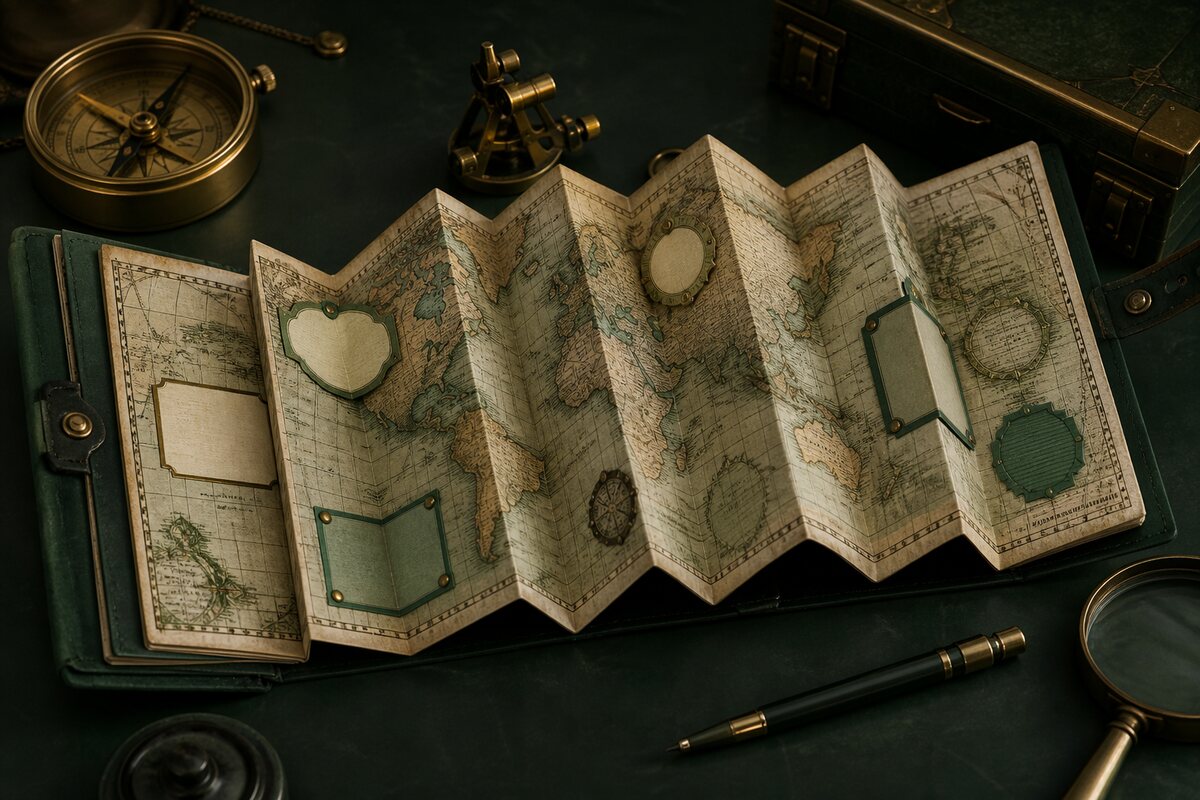
A good history of the Italian accordion needs a place where the threads meet. Castelfidardo offers that place: a town associated with makers, workshops, museum collections and a durable public vocabulary for the instrument. The point is not to turn one town into a single origin myth. It is to give the reader a physical map for the people and practices that follow.
The International Accordion Museum presents the instrument as a free-reed aerophone and places its collection inside a roughly two-century story. Its rooms connect early mechanisms, Italian manufacture and performers. That makes the museum a useful anchor for an atlas: it can hold objects, dates and listening questions together without pretending that a label tells the whole story.
When you read a maker history or inspect a used instrument, ask what Castelfidardo helps you see. Is the claim about a workshop, a family, a model, a local trade or a later international network? Keeping those scales separate is the beginning of responsible accordion research.
Castelfidardo’s standing rests on a documented concentration of workshops, parts suppliers and players rather than on a single claim, and that is why the town is studied as a place association. Researchers trace it through parish and chamber records, workshop addresses, trade catalogues and the movement of makers between streets, then compare those findings with instruments that survive. The same method, reading an object against the written record of its making, appears in the wooden lure guide, where a maker’s own documentation is set beside how the finished piece behaves in moving water. For Castelfidardo, the question is whether the archives and the surviving accordions describe the same town.
What the place can prove
Castelfidardo is valuable because several kinds of evidence can be read alongside one another there. A museum object can show construction, a maker history can name a workshop, and a local event can show how the instrument is remembered in public. Those are different claims. A display case may support a date or a material observation, but it does not automatically prove that every nearby workshop used the same method. Keep the object, institution and inference in separate notes.
A practical research route
When investigating a named instrument, begin with the museum collection or maker archive, then write down the exact wording of the claim. Next, photograph or transcribe visible marks without guessing what they mean. Compare the mark with a dated catalogue, a manufacturer history or a specialist record. Finally, connect the result to the regional and style entries in this atlas. The protocol is deliberately slow: it prevents a place name from doing the work of a source.
Common shortcuts to avoid
The most common error is treating Castelfidardo as a synonym for Italian accordion. Production, distribution and playing communities have never been contained by one town. Another error is assuming that a familiar maker name fixes the date or quality of an individual instrument. A third is quoting a museum label as though it were a complete industrial history. Each shortcut makes the story smoother and less accurate.
Limits of the evidence
Institutional pages are strong starting points for collection history and public chronology, but they have an editorial purpose and a finite scope. They may not identify every workshop relationship, export route or change in ownership. Local memories can add texture, yet an uncited recollection should remain a lead rather than a fact. This page therefore uses confidence language and invites a catalogue or archive reference when a detail is missing.
A useful example
Suppose a family instrument carries a Castelfidardo label, a faded serial plate and a case with a different name. The responsible conclusion is that the object has a documented place association and several open provenance questions. Record the visible evidence, ask the relevant maker or museum, and avoid assigning a precise year until the sources agree. That modest answer is more useful to a collector than a dramatic but unsupported origin story.
From place to archive
The most durable way to use this history is to carry the place into a record: maker, object, date, source and open question. That format works for a museum visit, a family instrument or a catalogue search. It also keeps the atlas from claiming that geography alone explains sound. Castelfidardo is a rich starting point because it allows material evidence, institutional memory and living performance to meet. The next source should always narrow the question rather than simply add another famous name.
Source note: Museo Internazionale della Fisarmonica. Accessed August 24, 2026.