Instrument literacy • Instruments & Equipment
Diatonic or chromatic button accordion?
The two button systems are not a simple good-versus-better choice. They open different relationships between layout, repertoire and technique.
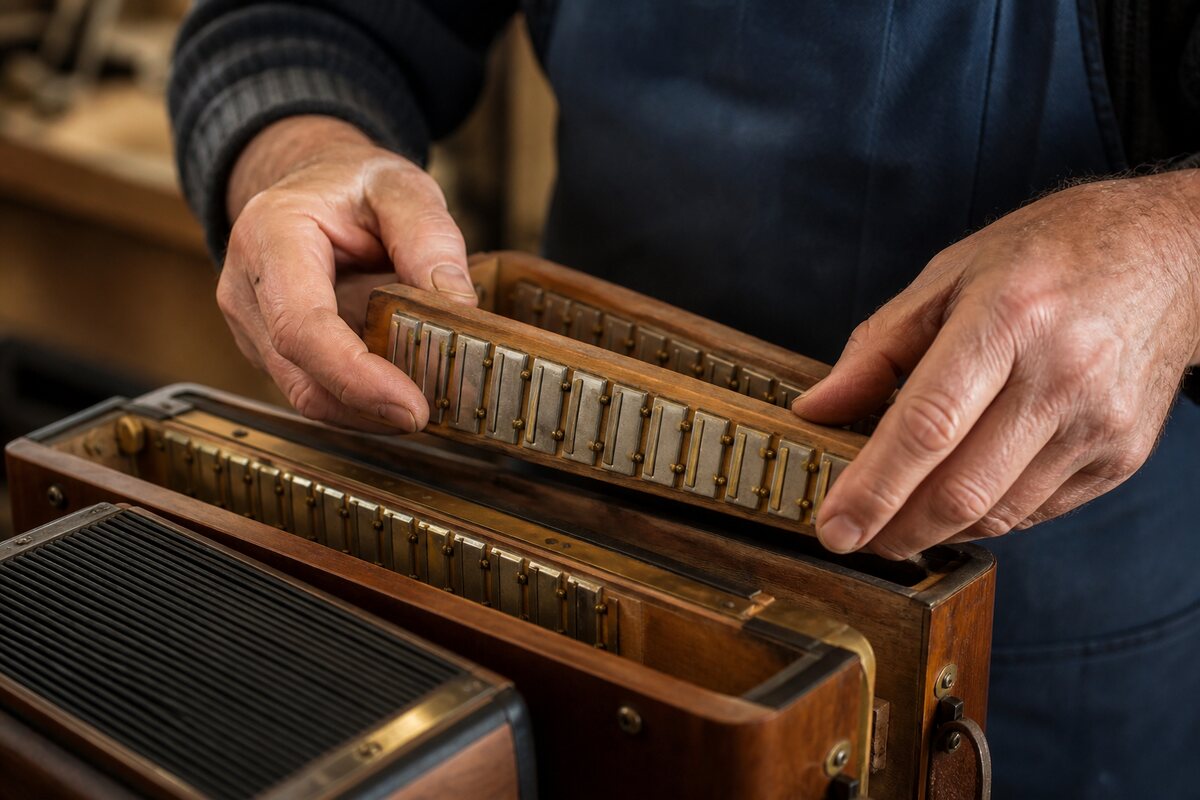
Diatonic and chromatic button accordions share the bellows principle but invite different habits from the player. Rai Cultura’s organetto explainer uses “diatonic” for an instrument with a button keyboard whose note relationships are closely tied to the direction of the bellows. Chromatic button systems offer a different layout logic and can support chromatic playing across a more uniform fingering map.
For a beginner, the practical question is not which system wins. Ask which repertoire, teacher, body feel and regional tradition you want to enter. An organetto used in a dance tradition may reward a very different first month of practice from a chromatic instrument prepared for concert work.
When comparing instruments, name the action accurately, listen to the intended repertoire and avoid using a model photograph as proof of a specification. The encyclopedia records the action field only when a source supports it.
The layout changes the work
Diatonic and chromatic button instruments are not merely two visual versions of the same keyboard. On a diatonic system, the note available can depend on bellows direction and button row, creating a close relationship between fingering, air and phrase. A chromatic system presents a different map that can make chromatic movement and transposition more uniform. Both systems can be demanding; they simply ask the body to organise musical information differently.
A decision protocol for beginners
Before buying, list three pieces or styles you genuinely want to play, the teachers or learning materials available to you, and the physical size you can manage. Try both systems if possible, even for a few minutes, and note wrist angle, button travel, bellows reach and left-hand comfort. Then ask whether the instrument’s setup matches the repertoire. This protocol turns an abstract comparison into a decision grounded in music and body.
Errors in online descriptions
Listings often use “button accordion” without saying whether the instrument is diatonic or chromatic, and some use regional words as though they were keyboard specifications. A photograph can mislead because rows and registers are not always visible. Ask for an exact action description, keyboard layout, range and tuning. Do not assume that an organetto label identifies every feature of the instrument in the photograph.
What the comparison cannot decide
The two labels do not predict tone, build quality, comfort or a player’s eventual musical identity. A well-made instrument with an unsuitable setup can be a poor choice, while a modest instrument can be an excellent teacher. Regional traditions also contain variation, and contemporary players cross boundaries. The article offers vocabulary and a test plan, not a ranking of systems or a shortcut to a perfect first instrument.
A useful first exercise
On a borrowed or school instrument, play one short melody slowly and mark every bellows change. Then play a simple chord or bass pattern and notice how the left hand changes the phrase. Compare the physical decisions rather than chasing speed. Write down what felt natural and what required explanation. Bring those observations to a teacher, who can connect the layout to a repertoire without turning a first impression into a permanent verdict.
Choose a relationship, not a winner
The best first instrument is the one whose layout, repertoire, teacher access and physical response make sustained learning possible. That may be diatonic or chromatic, and the answer can change as a player’s goals change. Keep a record of what you tried, what the instrument made easy and which questions remained. A comparison becomes valuable when it helps a person make a grounded next decision rather than repeating a hierarchy.
Source note: Museo Internazionale della Fisarmonica and Rai Cultura. Accessed August 24, 2026.