Repair boundary • Care & Repair
When an accordion needs a technician
Knowing when to stop experimenting is part of caring for an accordion.
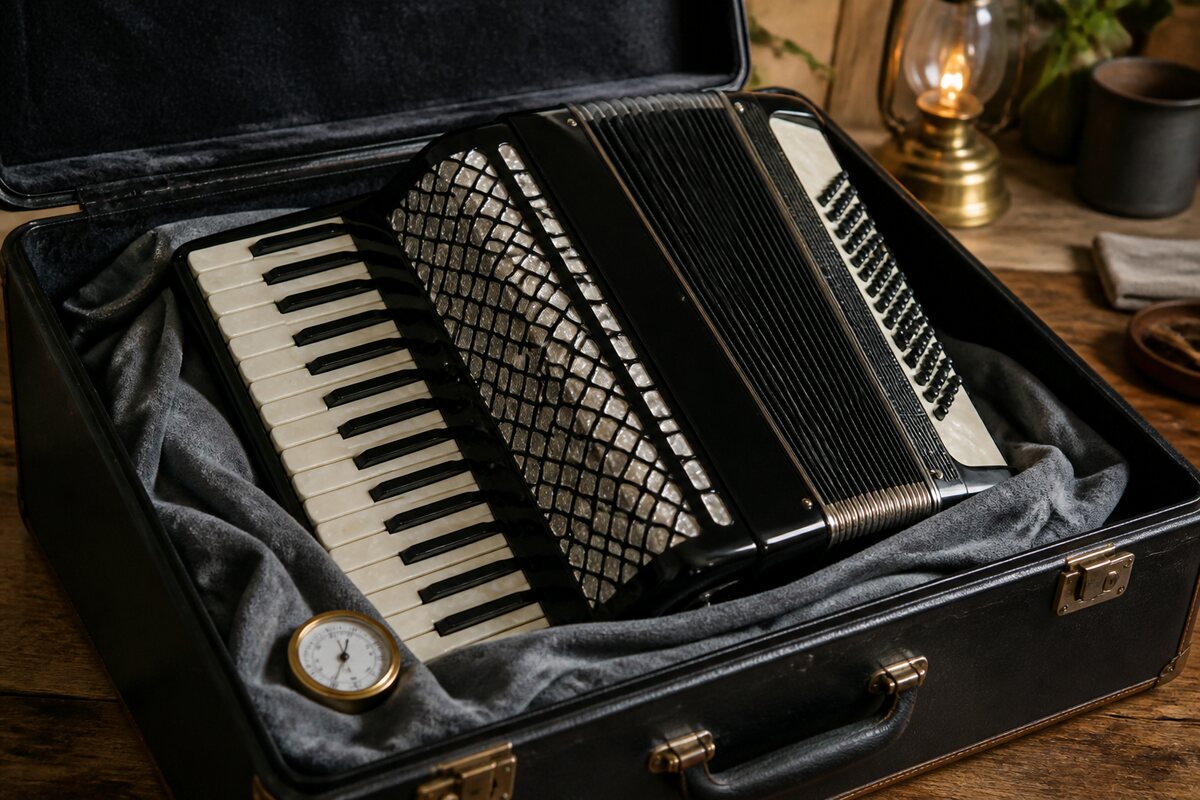
A technician visit is sensible when a key or button sticks, several notes speak unevenly, air disappears faster than expected, bellows folds split, a register fails to engage or a new noise appears inside the instrument. These symptoms can have different causes, and an external photograph rarely identifies the repair safely.
Before the appointment, write a short symptom log. Note the note or button, bellows direction, temperature or travel context and whether the problem is repeatable. Bring the case and any recent service information. This gives the technician better evidence and helps you understand the proposed work.
Home maintenance can protect surfaces and storage. It should not become an improvised reed, valve or tuning operation. The site offers questions and boundaries, not a substitute for hands-on expertise.
Some faults sit beyond the player’s reach: a reed that has shifted pitch after a knock, a cracked wax seal, a keyboard that has lost its regulation, or a bass mechanism that binds under load. These call for a technician with the tools and the parts, and delaying the repair usually widens the damage. Owners who travel to lessons, festivals or repair appointments by motorcycle often plan the journey as carefully as the instrument’s case, and the same preparation logic applies to touring routes around Akersberga, where road ferries, gravel surfaces and weather are checked before departure.
Some faults sit beyond the player’s reach. A reed that has lost its voice, a keyboard that has warped, a persistent leak at the bellows or a tuning that drifts within a single session all point to a qualified technician, because correction demands tools and measurements that a home bench cannot supply. The same logic applies to the instrument’s surroundings: daily care habits that keep dust, damp and temperature swings away from the case reduce the frequency of such visits. Where the fault is structural rather than cosmetic, delay tends to raise the cost of the eventual repair.
The point of referral
A technician is needed when the question has moved from handling to diagnosis. Sticking keys, uneven notes, disappearing air, split folds, a register that fails to engage or a new internal noise can have several causes. The same symptom can come from technique, temperature, a valve, a reed or alignment. A public article can help you notice and describe the problem, but it cannot safely identify the repair from a photograph.
Prepare a symptom record
Write the note or button involved, bellows direction, register selected, playing pressure, temperature or travel context and whether the symptom repeats. Make a short recording only if it is safe and useful, and bring the case and recent service information. Do not dismantle anything to obtain a better view. A clear record reduces appointment time and gives the technician a starting point that is more useful than “it sounds strange.”
Deciding urgency
A visible split, loose strap, burning smell, liquid exposure or sudden loss of control is a reason to stop playing and seek advice before further testing. A small cosmetic mark may wait for a scheduled inspection, but it should still be documented. If a key feels unsafe, do not press harder to complete a scale. Protecting the instrument and the player comes before proving the symptom yourself.
Common DIY mistakes
Household lubricants, glue, compressed air and untrained reed or valve adjustments can create new problems. Opening an accordion can also disturb seals or expose delicate parts to dust. Online tutorials may concern a different construction or assume tools and experience that the viewer does not have. Use public guidance to formulate questions, not to replace the hands-on judgment of a qualified repairer.
What a good appointment produces
A useful service conversation identifies the symptom, likely cause, work proposed, parts or tuning involved and what can reasonably be expected afterward. Ask which observations are certain and which are provisional. Keep the invoice and any photographs with the instrument record. Whether you proceed or wait, that documentation improves future provenance and prevents the same uncertainty from being reconstructed from memory.
A referral is useful evidence
A technician’s assessment can become part of the instrument’s long-term record when the symptom, proposed work and outcome are written down. Ask for plain language, retain the invoice and note any changed tuning or configuration. This helps the next owner, supports provenance and prevents repeated experiments. The Atlas offers the boundary and the questions; the qualified repairer supplies the hands-on diagnosis. Before collecting the instrument, ask what handling or acclimatisation is recommended, and record any limitation that should guide the next practice session.
Source note: The Bellows Atlas method. Accessed August 24, 2026.