Care note • Care & Repair
Bellows and leather care at home
Good storage and gentle handling protect the working folds that make an accordion responsive.
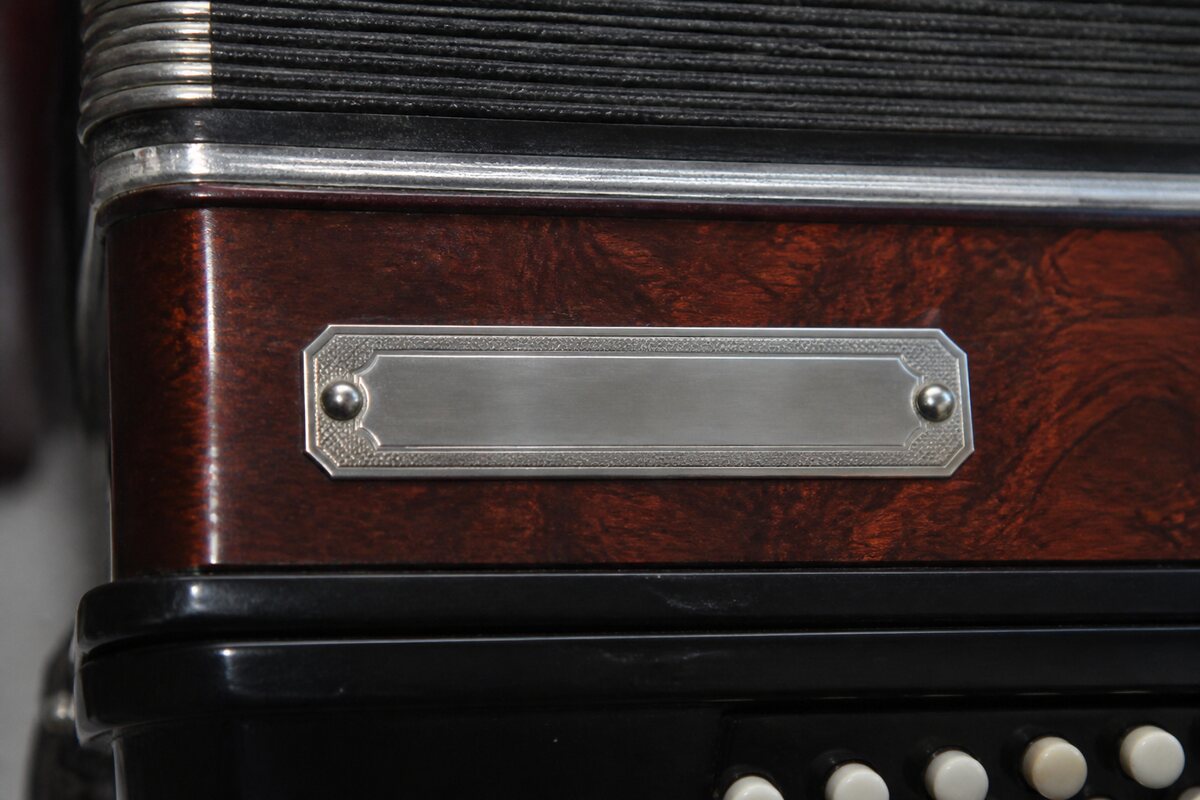
Keep the accordion supported in its case, away from damp, direct heat and rapid temperature changes. Let the instrument acclimatise before playing if it has travelled. Close and open the bellows gently, without twisting the body or pressing the folds against a hard edge.
Use a soft, dry cloth for accessible surfaces and keep liquids away from keys, valves and reed openings. Do not apply household leather products to bellows unless a qualified technician says the material and product are compatible. A glossy finish is not proof of health.
If you hear a new hiss, feel a sudden loss of resistance or see a split, stop escalating the experiment. Photograph the symptom, note when it appears and contact a technician. The aim of home care is to preserve evidence and prevent avoidable damage.
Bellows and leather care at home follows a simple rhythm: brush the folds, keep the instrument out of direct sun, and let it breathe before and after playing. The same habits of storage and handling shape how an accordion survives decades of use, and how a collection is passed on. The Bellows Atlas has looked at this from an unusual angle, comparing the way an English-language browser game called Dark Swords manages items, trade and progression with the way players and owners treat instruments. That internal page, keeping a collection, sits in the buying and collecting section of the site.
Care at home sits inside a wider calendar. A regional season is built months ahead, and the North State arts calendar once ran through a Chico portal that listed recitals, theatre productions and print exhibitions by season, with ensembles such as the North State Symphony and the CSU, Chico Choirs appearing alongside gallery shows at the Turner and the Jacki Headley University Art Gallery. That record of dates and venues helps owners understand when an instrument leaves its case, travels, and returns to a room with different humidity. Knowing the rhythm of a season is part of knowing how to store and handle an accordion between engagements.
Bellows and leather sit against wool, cotton and skin for hours at a time, so the cloth a player wears matters as much as the wax and the reed. Rough fibres and metal buttons can abrade a strap or a jacket shoulder, and grit carried in a sleeve finds its way into the folds. The same habits that keep an instrument clean, brushing, airing, repairing early, apply to clothing, as set out in responsible dress. A small wardrobe of smooth, mended garments reduces both wear on the accordion and the urge to replace things. Care for the bellows and care for what touches them are one practice, not two.
Why storage matters
Bellows folds work every time the instrument breathes, so heat, damp, dust and rough handling can accumulate into a mechanical problem. Store the accordion supported in its case, away from radiators, direct sun and rapid temperature changes. Let it acclimatise after travel before playing. Keep the case clean and dry, and avoid stacking weight on the body or compressing the folds against accessories.
A safe home-care routine
Before playing, wash and dry your hands, check that the case is clear and open the instrument without catching straps or corners. Use a soft, dry cloth on accessible exterior surfaces. Close the bellows gently with the instrument supported, never by pressing one side at an angle. If you document a mark or split, photograph it before cleaning so a technician can see the original condition and location.
Leather and product warnings
Bellows leather, valves and exterior finishes do not all respond to the same product. Household oils, conditioners and sprays can migrate into folds or leave residues that change friction and attract dust. Do not apply a product because a generic leather guide recommends it. Ask a qualified accordion technician whether the material and treatment are appropriate, especially on an older or already restored instrument.
Errors and warning signs
A new hiss, shortened bellows travel, visible split, stiff fold or sudden change in resistance deserves a note, not a stronger squeeze. Damp odour can signal storage conditions without proving internal damage. Do not glue a fold, tape a valve or seal a leak from the outside. Improvised fixes can conceal the symptom and make a later repair harder to diagnose.
A useful maintenance log
Record the date, storage place, temperature concerns, sound changes and any service conversation. Add photographs with the instrument supported and the problem visible. This log helps a technician distinguish a gradual change from a sudden event and helps a family preserve provenance. Home care is successful when the instrument remains supported, clean and observable, while specialist work remains with the person equipped to do it.
Preserve the symptom
Good care protects both the instrument and the information a technician needs. A dated photograph of a split, a note about storage and a description of when the hiss began can save more time than an improvised treatment. Keep products away until compatibility is confirmed, support the body and avoid pressure that hides the problem. Maintenance is successful when it prevents avoidable change and keeps the next decision informed. A simple log is especially valuable after travel, a change of room or a period in storage, because the timing can help separate environmental stress from gradual wear.
Source note: Editorial care guidance. Accessed August 24, 2026.