Workshop profile • Instruments & Equipment
The Castagnari family workshop
Castagnari’s family workshop history helps explain why the organetto belongs in the modern Italian accordion conversation.
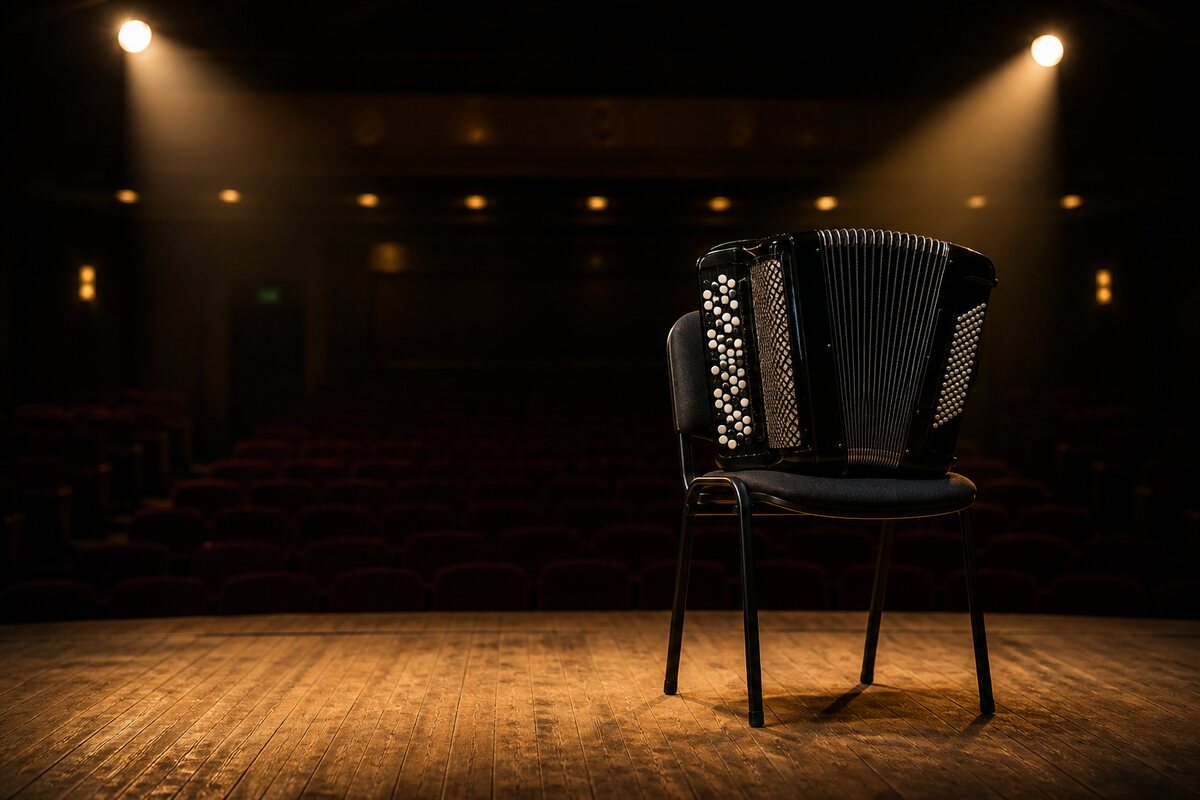
Castagnari presents a family workshop history that reaches back to 1914 and describes a late twentieth-century revival of the diatonic organetto. That combination matters. It links a long craft lineage to a later renewal of interest in an instrument whose regional uses cannot be reduced to a single sound.
For readers, the story is a reminder that “traditional” and “modern” are not opposites. A workshop can preserve construction knowledge while responding to new players, stages and teaching needs. The result is not a frozen museum object but a living instrument with changing expectations around tuning, ergonomics and projection.
The Atlas keeps the claim narrow: this is what the maker’s own history supports. Questions about a particular model, reed setup or suitability for a repertoire belong on the model page and in a conversation with a specialist.
The Castagnari workshop in Recanati grew alongside the organetto revival of the later twentieth century, when players and makers returned to small, hand-built instruments. That revival rested on habits common to many small workshops: measuring twice, cleaning thoroughly, and letting materials settle before assembly. The Bellows Atlas notes similar shared craft habits between accordion work and home brewing, from kit brewing and fermentation to cleaning and small workshop process. The comparison is modest but useful, since both practices reward patience and repeatable method over speed.
Workshop continuity and change
Castagnari’s account of a family workshop reaching back to 1914 and its later organetto revival is useful precisely because it joins craft continuity to changing musical demand. A workshop can carry forward construction knowledge while adapting layouts, reed choices and ergonomics for new players. “Traditional” should therefore describe a relationship to repertoire or craft, not a claim that the instrument has remained untouched.
How to investigate a workshop claim
Read the maker history first, then separate named family members, workshop dates and model references into different notes. Use a catalogue or current model page for specifications, not a general history paragraph. When studying an older instrument, record the name exactly as it appears, photograph the grille and bellows, and ask whether the configuration is original. The goal is to connect an object to a workshop without erasing its individual repairs or changes.
Organetto is not one sound
The organetto can serve regional dance, staged performance, teaching and contemporary composition. Its small size and diatonic relationship to bellows direction create a particular physical conversation, but they do not dictate a single repertoire. Listen for the player’s articulation, the social setting and the arrangement around the instrument. A workshop profile should open those listening paths instead of turning one maker into a shorthand for all organetto practice.
Limits and buyer questions
A family-workshop history cannot tell you whether a used instrument is comfortable, correctly tuned or suitable for your hands. Ask about the exact model, reed setup, tuning, action, service history and intended repertoire. A seller’s description may be accurate about the brand while remaining silent about a replaced valve or altered register. A technician can inspect the mechanical questions that a public history page cannot answer.
An example of responsible wording
If an instrument is described as a Castagnari organetto, the safe first statement is that the label or seller associates it with that maker. Then record the visible model name and seek confirmation. Do not infer a date, regional style or performance value from the brand alone. This layered answer respects the maker’s history, the owner’s object and the player’s actual needs, while leaving room for a specialist to add evidence.
A living workshop question
The workshop story becomes most useful when it sends the reader back to the instrument in front of them. Note the model, action, reed setup and service history, then ask how that individual configuration serves the repertoire you want to play. A family history can explain why a maker matters without deciding whether one model fits every player. Craft continuity, regional practice and modern use are related threads, not interchangeable labels.
Source note: Castagnari official history. Accessed August 24, 2026.