Buying and collecting • Buying & Collecting
The used Italian accordion checklist
A used instrument can be a wonderful entry into Italian accordion culture. A calm inspection is the best first accessory.
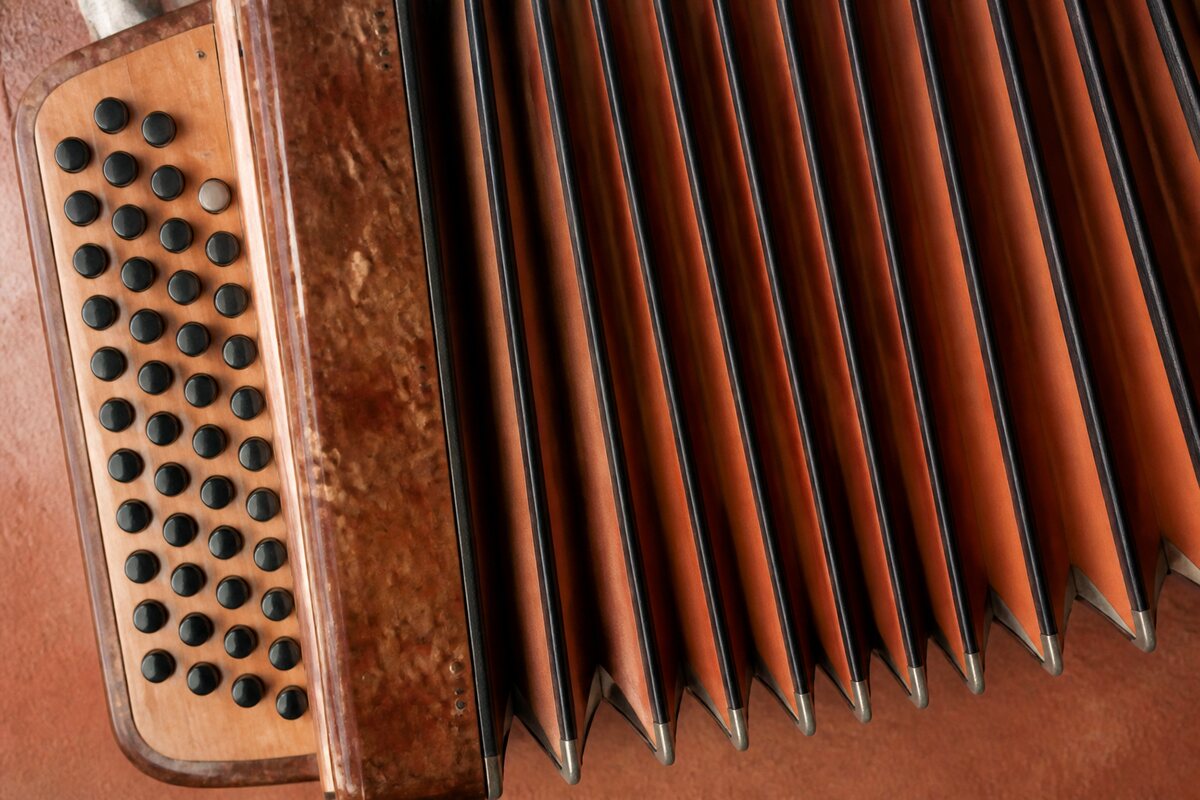
Before you discuss price, ask the instrument to tell you how it has been treated. Check that the case supports it, inspect bellows folds for damage, test keys or buttons for consistent travel, listen for obvious air leaks and ask whether the instrument has been serviced. Do not force a stiff mechanism to prove a point.
Write down the model name and serial information exactly as presented, then compare those details with maker documentation where available. Ask for a service invoice rather than accepting “recently tuned” as a complete condition report. If the instrument is valuable or the symptoms are unclear, budget for a technician before deciding.
The checklist is designed to improve questions, not produce an instant valuation. A fair purchase depends on local market, condition, setup, provenance and what you want to play.
A checklist settles the mechanical questions, but condition also shows in surfaces, materials and wear patterns that no list can name. Collectors who handle objects regularly learn to date a piece by its hardware, its finish and the marks left by use, a habit described in this guide to the Paris antiques market. The same discipline applies to a used Italian accordion: read the celluloid, the reed plates and the bellows corners before asking about price. Buyers who can place an instrument within a maker’s production period judge repairs and replacements more accurately.
A used accordion bought far from home raises a second set of questions: transport, timing and the paperwork that governs both. Buyers who travel by motorcycle to inspect an instrument should plan routes, road ferries and weather windows before committing to a viewing, and should confirm licence categories and dated local checks for each country crossed. The same discipline applies to the instrument itself: verify the seller’s location, agree a meeting point with parking, and allow time for a second visit if the reeds need attention. Preparation of this kind reduces the risk of returning home with an accordion that cannot be serviced locally.
Start with condition, not romance
An inherited or well-used Italian accordion can carry wonderful musical and family history, but a famous label does not cancel mechanical wear. Begin by checking that the case supports the body, the bellows folds look intact, keys or buttons return evenly and the registers operate without force. Listen at a comfortable pressure and stop if something feels unsafe. The first goal is to preserve the instrument while learning what questions it raises.
A calm inspection protocol
Bring a notebook, a small light and a phone for photographs, but do not open the instrument. Record the maker and model exactly, then test a small selection across the keyboard or button rows at soft and medium pressure. Note hiss, delayed notes, uneven action, loose straps, damaged corners and case odour. Ask when it was last serviced and request an invoice or technician name rather than relying on a verbal adjective such as “perfect.”
Questions that change the decision
Ask whether the instrument has been stored in a damp place, transported recently, modified, retuned or used for stage work. Ask which parts have been replaced and whether the current layout matches the original model. Clarify what is included in the sale and whether a return period exists. These answers are not a valuation, but they change the amount of risk and the cost you should reserve for inspection or repair.
Errors to avoid
Do not test a stiff key by forcing it, spray cleaner into a grille, compare an unserviced instrument with a studio recording or treat a low price as proof of a bargain. A serial number alone cannot establish condition or value. A seller may be honest and still lack technical vocabulary. Write down what is observed and what is claimed, then let an independent technician assess the mechanical questions.
A decision example
Suppose the instrument sounds promising but shows a new hiss and one register that does not engage. The correct next step is not an immediate bargain or a dramatic rejection. Price the independent inspection, ask whether the seller will allow it, and compare the result with your repertoire and budget. If the technician finds the issue manageable, you have evidence. If not, you have avoided paying for an uncertain story.
Budget for the unknown
A used accordion decision is stronger when the budget includes inspection, transport, service and the possibility that the instrument is not suitable. That reserve is not pessimism. It recognises that sound, action and provenance cannot all be settled from a listing. Use the checklist to narrow risk, then let a technician and your own repertoire goals decide whether the object deserves a place in your case.
Source note: The Bellows Atlas method. Accessed August 24, 2026.