Artist file • Artists & Performances
Gervasio Marcosignori and the listening map
An artist entry should help a reader hear, locate and verify a performer, not turn a name into a vague legend.
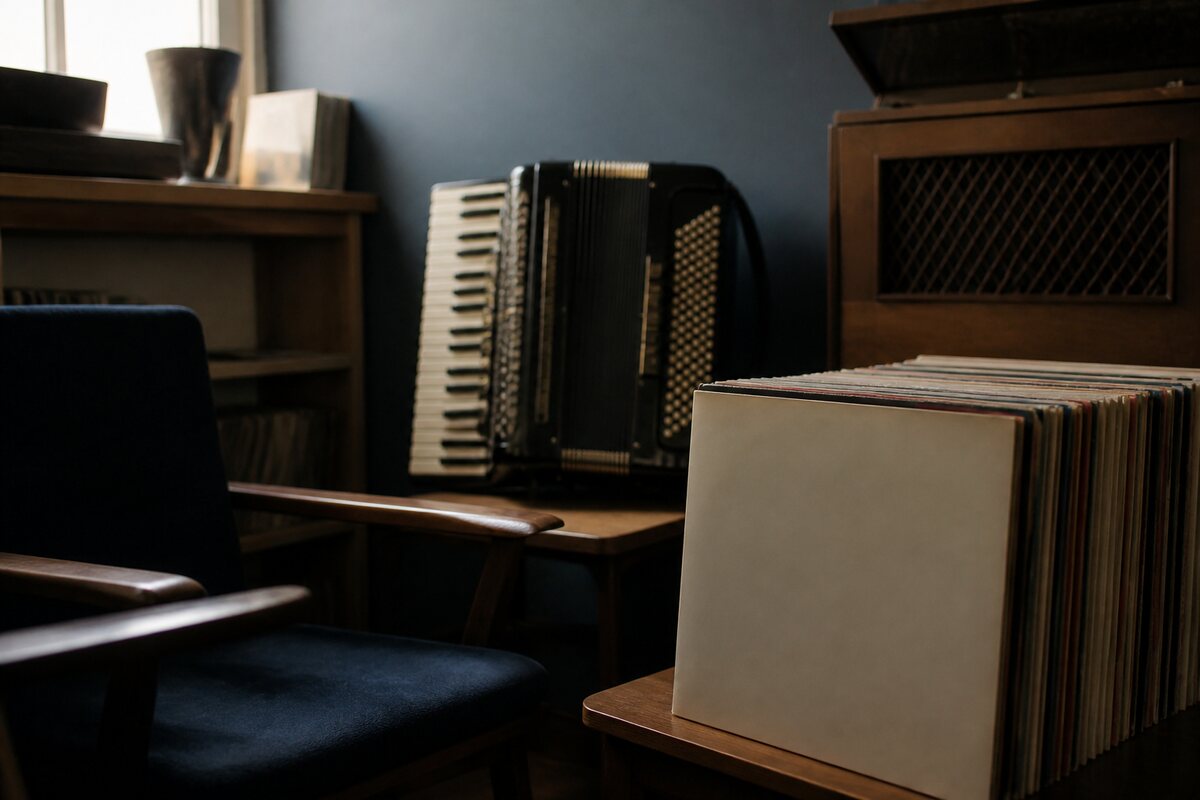
The Bellows Atlas treats artist profiles as listening maps. A name matters when it can be connected to a documented career, a recording, a repertoire choice, an instrument relationship or a place. For Gervasio Marcosignori, the editorial task is to keep those links explicit and to verify biographical detail against a primary or institutional source before expanding the entry.
That discipline is especially important for accordion history, where memories of radio, dance halls and virtuoso technique often circulate without a clear citation. A profile can still be useful while it is being built: mark what is confirmed, point to the archive or museum, and invite corrections through the contact route.
The entry therefore sits beside the recordings and artist index rather than pretending to be a complete biography. The goal is a trustworthy starting point for listening.
Marcosignori’s recordings reward attention to register and articulation rather than to repertoire alone. The same habit of close listening applies to any instrument with a documented signal tradition, as in the German hunting horn and brass world, where Fuerst-Pless and Parforcehorn calls, the Saint Hubert mass and Musikverein life are studied as a living practice. Approaching listening to an instrument culture this way gives a useful comparison for anyone tracing how a fixed repertoire passes between players. The questions asked of a hunting horn, who plays it, on what occasion, and from which written source, transfer directly to the accordion.
What an artist file should do
An artist page is not a collection of adjectives. It should help a reader identify the person, locate a performance or recording, understand the repertoire context and see which claims are documented. For Gervasio Marcosignori, the responsible starting point is a listening map with clearly marked evidence. A short confirmed relationship is better than a complete-sounding biography assembled from uncited memories or copied profiles.
A verification protocol
Begin with an institutional biography, museum record, catalogue or credited recording. Record the exact name, dates only when sourced, associated places and the source’s description of the work. Then look for a second independent reference before adding a major career claim. Keep a separate list of leads supplied by readers. A lead can guide research, but it should not appear as fact until the page has a checkable citation.
Listening beyond the legend
When a recording is available lawfully, note the instrument, ensemble, repertoire title, date and setting if the publisher supplies them. Listen for register colour, articulation and the relationship between soloist and accompaniment. These observations make the artist relevant to players without claiming that one recording represents a whole career. They also give readers a reason to follow the recording index and the regional style pages.
Common biography errors
Accordion histories often repeat birthplaces, competition results or instrument associations across sites without showing where the details began. A museum name in a search result is not proof that the museum supports every sentence. Avoid invented dates, unverified superlatives and private anecdotes. If the evidence is thin, say that the file is a starting point and invite a catalogue or archive reference through the contact route.
A bounded conclusion
The present file can responsibly establish an editorial research path while more primary material is collected. That is useful because it tells a reader how to continue and protects the person from a fabricated biography. The next additions should be specific: a dated program, a credited recording, a museum catalogue entry or a documented instrument relationship. Each addition should carry its own source rather than borrowing authority from the artist’s name.
Build the artist file slowly
An evolving artist entry is not a weakness when its evidence is visible. Add one dated program, recording or institutional reference at a time, and explain what the new source changes. Keep reader leads separate until checked, and never use a second uncited biography to make the page sound complete. This process gives the performer a fair record and gives the audience a reason to return as the listening map becomes more precise.
Source note: Editorial research note. Accessed August 24, 2026.